
Fungus Gnats: Treatment & Prevention

Fungus Gnats are a common problem for gardeners, especially when starting seeds indoors. Fungus Gnats are attracted to moist soil to lay their eggs. Once the larvae hatch, they eat your plant roots. These are the best ways to get rid of fungus gnats in order of most effective to least effective:
About Fungus Gnats:
Fungus Gnats will kill your seedlings!
- Hatched larvae eat plant roots.
- 28 Day Life Cycle.
- Prefer moist soil to lay eggs.
- Do not bite.
- Not harmful to people or pets.
Using multiple treatment methods of pest management will yield best results.
Rather watch a short video on this topic?
[TikTok] Best Ways to Get Rid Fungus Gnats
PREVENTATIVES:
- STERILIZE YOUR POTTING SOIL BEFORE USE!
Sanitizing soil effectively kills fungus gnat larvae, as well as other pests and pathogens that may be present in the soil. Soil sterilization can also reduce the risk of soil-borne diseases affecting plants, providing a clean growing environment for healthy plant development.- Pour Boiling Water over the soil.
- Microwave your potting soil on high for 90 seconds per pound (0.45 kg) of soil.
- Bake soil in an oven at 180°F (82°C) for 30 minutes to 1 hour.
- Beneficial Nematodes:
Introducing beneficial nematodes such as Steinernema feltiae to the soil is highly effective as they prey on fungus gnat larvae, controlling their population effectively.- Pros:
- Effective Biological Control: Beneficial nematodes, particularly species like Steinernema feltiae, are natural predators of fungus gnat larvae. When applied correctly, they can significantly reduce the population of fungus gnats in the soil.
- Non-toxic to Plants and Environment: Beneficial nematodes are safe to use around plants, animals, and humans. They specifically target the larvae of pests like fungus gnats without harming beneficial organisms or causing environmental damage.
- Long-lasting Effects: Once established in the soil, nematodes can continue to provide control over an extended period. They reproduce and continue to seek out and feed on target pests, providing ongoing protection for your plants.
- Easy to Apply: Nematodes are typically applied as a soil drench or spray and are relatively simple to administer, especially for small-scale applications. They can be incorporated into an integrated pest management (IPM) program without much hassle.
- Cons:
- Sensitive to Environmental Conditions: Beneficial nematodes are sensitive to environmental factors such as temperature and moisture. Extreme temperatures or dry conditions may reduce their efficacy, making it essential to apply them under optimal conditions.
- Limited Shelf Life: Nematodes are living organisms with a limited shelf life. They must be kept refrigerated and used within a specified timeframe to ensure their viability. Improper storage or expired products may result in reduced effectiveness.
- Cost Consideration: While nematodes can be an effective solution, they may come with a higher initial cost compared to some other control methods. However, their long-lasting effects and non-toxic nature often justify the investment for those seeking sustainable pest management solutions.
- May Require Multiple Applications: In cases of severe infestations or challenging environmental conditions, multiple applications of nematodes may be necessary to achieve desired control levels. This could add to the overall cost and effort required for pest management.
- Pros:
- Use a Hydrogen Peroxide mix when watering plants.
Hydrogen peroxide can kill fungus gnat larvae and disrupt their life cycle by releasing oxygen, which can suffocate the larvae in the soil. It may also help to aerate the soil and improve drainage, creating less favorable conditions for fungus gnat development.- Hydrogen peroxide should be diluted before application to avoid damaging plant roots or beneficial soil organisms. A common recommendation is to dilute 3% hydrogen peroxide with water at a ratio of 1:4 or 1:5 (one part hydrogen peroxide to four or five parts water).
- Apply the diluted hydrogen peroxide solution to the soil, ensuring thorough coverage of the affected areas. Allow the solution to penetrate the soil and reach the larvae.
- Neem Oil
Neem Oil is a natural insect repellent and may also have mild larvicidal effects, affecting the development of fungus gnat larvae in the soil.- Pros: Easy-to-use, non-toxic, and works for other pests as well.
- Cons: Requires regular reapplication, is slow-acting, and it smells!
TREATMENTS:
Here’s a list of ways to get rid of fungus gnats ranked from most effective to least effective:
- Insecticidal Soap:
Using insecticidal soap sprays directly targets adult gnats by disrupting their waxy coating, causing dehydration.- Pros:
- Effectiveness: Insecticidal soap is an effective control method for fungus gnats, particularly for targeting adult gnats. It works by disrupting the outer membrane of the insects, leading to dehydration and ultimately death.
- Non-toxic: Insecticidal soap is generally considered safe for use around humans, pets, and beneficial insects when used as directed. It poses minimal risk to the environment compared to synthetic chemical pesticides.
- Environmentally Friendly: Insecticidal soap breaks down rapidly in the environment, reducing the risk of residual buildup in soil or water. It is considered an environmentally friendly alternative for pest control in both indoor and outdoor settings.
- Easy to Use: Insecticidal soap is easy to apply and can be readily purchased from garden centers or online. It can be applied as a spray directly to affected plants, targeting adult fungus gnats on contact.
- Cons:
- Limited Effectiveness Against Larvae: While insecticidal soap can help control adult fungus gnats, it is less effective against the larvae that reside in the soil. Larvae are protected by the soil and may not come into contact with the soap spray.
- Potential Phytotoxicity: Some plant species may be sensitive to insecticidal soap, particularly if applied at high concentrations or in hot weather. It’s important to test the product on a small area of the plant and monitor for any signs of leaf burn or damage.
- Reapplication Required: Insecticidal soap may need to be reapplied periodically to maintain effective control, especially if new adult gnats emerge or if the infestation persists. Regular monitoring and follow-up treatments may be necessary.
- Selective Impact: Insecticidal soap primarily targets soft-bodied insects like fungus gnats and may have limited impact on other pests with harder exoskeletons. It’s important to identify the target pest accurately before applying insecticidal soap.
- Pros:
- Bacillus Thuringiensis var. Israelensis (BTI):
BTI dunks or granules applied to the soil kill fungus gnat larvae effectively without harming plants or pets.- Pros:
- Highly Effective Against Larvae: BTI is specifically formulated to target the larvae of fungus gnats and other dipteran insects like mosquitoes. It effectively kills the larvae upon ingestion, disrupting their lifecycle and preventing further development.
- Selective Action: BTI is highly selective and primarily affects larvae of certain insect species. It is non-toxic to humans, pets, and beneficial insects such as bees and ladybugs, making it an environmentally friendly pest control option.
- Safe for Use Around Plants: BTI is safe to use around plants, as it specifically targets the larvae in the soil without harming the plant itself. It does not pose risks of phytotoxicity or residue buildup in the soil.
- Long-lasting Effects: Once applied to the soil, BTI continues to provide control over an extended period, typically several weeks to months, depending on environmental conditions. It provides ongoing protection against fungus gnat larvae infestations.
- Cons:
- Limited Effect on Adult Gnats: While BTI is highly effective against fungus gnat larvae, it does not directly target adult gnats. Therefore, it may not provide immediate relief from adult gnat populations, and additional control measures may be needed to manage adult insects.
- Application Method: BTI is typically applied as dunks or granules that are mixed with water and then applied to the soil surface. This application method may require some effort and may not be as convenient as other control methods like sprays.
- Cost Consideration: BTI products may have a higher initial cost compared to some other control methods. However, considering its effectiveness and long-lasting effects, the investment may be justified for those seeking sustainable pest management solutions.
- Environmental Persistence: While BTI breaks down over time in the environment, repeated applications may result in the buildup of BTI residues in the soil. However, its selective action and minimal impact on non-target organisms help mitigate environmental concerns.
- Pros:
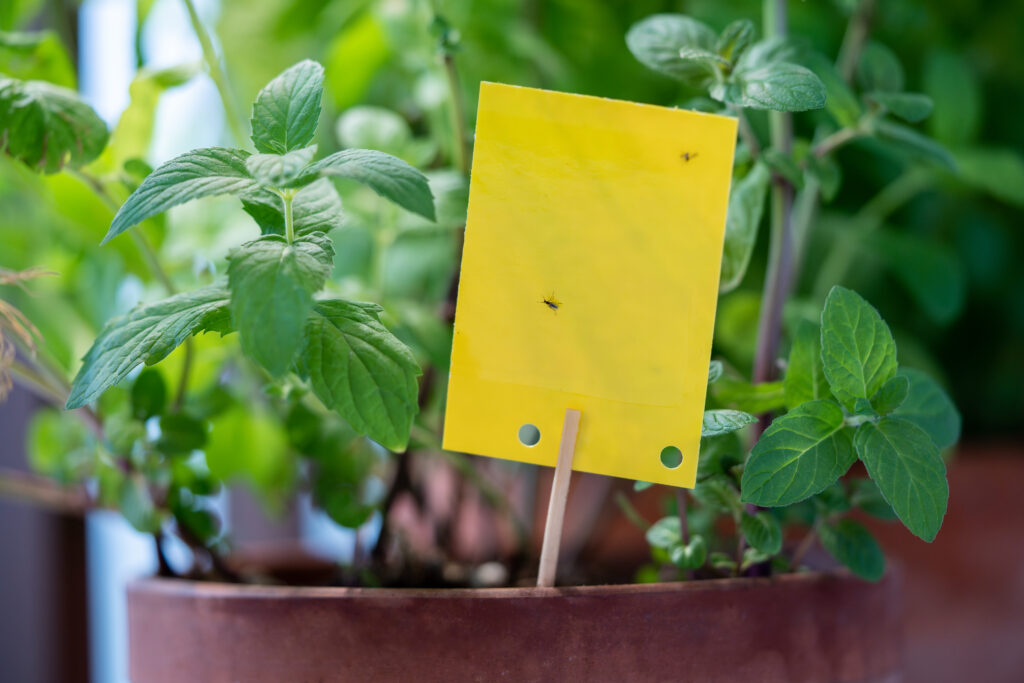
- Yellow Sticky Traps:
Placing yellow sticky traps near the soil surface attracts and catches adult fungus gnats, reducing their numbers effectively.- Pros:
- Effective Monitoring Tool: Yellow sticky traps are highly effective for monitoring and trapping adult fungus gnats. The bright yellow color attracts the flying adults, and once they land on the sticky surface, they become trapped.
- Non-toxic: Yellow sticky traps are non-toxic and pose no threat to humans, pets, or beneficial insects. They provide a safe and environmentally friendly method for controlling fungus gnats without the use of chemicals.
- Easy to Use: Yellow sticky traps are easy to deploy and require minimal setup. They can be placed directly in the soil or hung near plants, making them suitable for both indoor and outdoor use.
- Cost-effective: Yellow sticky traps are relatively inexpensive and can be purchased in bulk. They offer a cost-effective solution for monitoring and managing fungus gnat populations, especially in large-scale or commercial settings.
- Cons:
- Selective Effectiveness: While yellow sticky traps are highly effective for trapping adult fungus gnats, they do not target larvae or pupae in the soil. They primarily address the adult stage of the pest, which may not provide complete control of the infestation.
- Limited Impact on Population: Yellow sticky traps may help reduce the adult population of fungus gnats, but they may not completely eliminate the pest, especially if larvae continue to develop in the soil. They are most effective when used as part of an integrated pest management (IPM) approach alongside other control methods.
- Aesthetic Concerns: Some people may find the presence of yellow sticky traps unsightly, especially when used indoors. Considerations should be made regarding their placement to minimize their visibility while maximizing effectiveness.
- Non-selective Trapping: Yellow sticky traps can also capture beneficial insects and non-target organisms, potentially disrupting the natural balance of the ecosystem. Careful monitoring and placement are necessary to minimize unintended consequences.
- Pros:
- Soil Drying:
Allowing the soil to dry out between watering sessions can reduce fungus gnat populations as they thrive in moist environments.- Pros:
- Disrupts Fungus Gnat Life Cycle: Fungus gnats thrive in moist soil conditions. Allowing the soil to dry out between waterings disrupts the life cycle of fungus gnats by reducing the humidity and moisture levels that are essential for their development and reproduction.
- Non-toxic and Environmentally Friendly: Soil drying is a non-chemical method of pest control, making it safe for use around humans, pets, and beneficial insects. It does not introduce any harmful substances into the environment.
- Cost-effective: Soil drying requires no additional purchases or investments in equipment, making it a cost-effective option for managing fungus gnat populations. It simply involves adjusting watering practices to allow the soil to dry out between waterings.
- Promotes Plant Health: Overly moist soil can lead to root rot and other fungal diseases in plants. Allowing the soil to dry out between waterings not only helps control fungus gnats but also promotes healthier root development and overall plant vigor.
- Cons:
- May Stress Plants: Some plant species are sensitive to fluctuations in soil moisture levels. Allowing the soil to dry out too much or too frequently can stress plants and lead to wilted or unhealthy foliage.
- Requires Monitoring and Adjustments: Achieving the right balance of soil moisture to control fungus gnats without harming plants requires careful monitoring and adjustments to watering practices. It may take some trial and error to find the optimal watering schedule for each plant.
- Not Effective for Severe Infestations: Soil drying may not be sufficient to control fungus gnat populations in cases of severe infestations. It is most effective as a preventive measure or in conjunction with other control methods for comprehensive pest management.
- Temporary Solution: Soil drying provides temporary relief from fungus gnats by creating unfavorable conditions for their development. However, if underlying issues such as overwatering or poor drainage are not addressed, fungus gnat populations may rebound once soil moisture levels are restored.
- Pros:
- Removal of Organic Matter/Adding Sand:
Remove the top 1 inch of soil to remove and fungus gnat eggs and then add sand on top of the soil. Sand improves soil drainage to reduce moisture and acts as a barrier to the soil for laying eggs.- Pros:
- Improves Soil Drainage: Sand can help improve soil drainage by increasing the porosity of the soil. Excess moisture is one of the primary factors that contribute to fungus gnat infestations, so improving drainage can help create less favorable conditions for their development.
- Reduces Moisture Retention: Unlike organic materials such as peat moss or compost, sand does not retain moisture as readily. By incorporating sand into the soil or using it as a top dressing, you can reduce the moisture content of the soil, making it less attractive to fungus gnats for breeding.
- Provides Physical Barrier: A layer of sand on the soil surface can create a physical barrier that makes it more difficult for adult fungus gnats to access the soil to lay their eggs. This can help reduce the likelihood of infestations and limit the emergence of new gnats.
- Inorganic and Sterile: Sand is an inorganic material and does not provide a nutrient source for fungus gnat larvae or other pests. It is also sterile, meaning it does not contain pathogens or microorganisms that could contribute to pest or disease issues.
- Cons:
- May Affect Soil Structure: Excessive use of sand in soil can alter its texture and structure, particularly in clay soils. Sand particles can increase soil compaction over time, reducing aeration and water infiltration, which may negatively impact plant growth.
- Limited Nutrient Retention: Sand does not provide any nutrients to plants and may result in poor nutrient retention in the soil. Plants may require more frequent fertilization to meet their nutritional needs when grown in sandy soils.
- Potential for Over-drying: While reducing soil moisture is desirable for fungus gnat control, excessive drying of the soil can stress plants and affect their growth. Care should be taken to maintain an appropriate balance of moisture levels to avoid detrimental effects on plant health.
- Does Not Address Existing Infestations: While sand can help prevent fungus gnat infestations by creating less hospitable conditions for breeding, it does not eliminate existing larvae or pupae in the soil. Additional control measures may be necessary to address current infestations.
- Pros:
It’s important to note that integrated pest management (IPM) strategies often combine multiple methods for the most effective control of fungus gnats while minimizing environmental impact and pesticide resistance. Always read and follow label instructions when using any chemical control methods.
Sources:
1. “Biological Control of Fungus Gnats” – University of California Statewide Integrated Pest Management Program
2. “Managing Fungus Gnats Indoors” – University of Minnesota Extension
3. “Fungus Gnats Management Guidelines” – University of Florida IFAS Extension
4. “Controlling Fungus Gnats with Biological and Chemical Controls” – University of California Statewide Integrated Pest Management Program
5. “Fungus Gnats: How to Get Rid of Fungus Gnats in Houseplants” – PennState Extension

Responses